Why is my child struggling with GCSE English – and how can I help?
If you’ve ever found yourself thinking, “They’ve always been fine at English. Why are they suddenly struggling?”, you’re certainly not alone. It’s one of the most common questions parents ask me.
English, alongside maths and science, is one of the core GCSE subjects. A pass (Grade 4 or above) is required for most sixth forms, colleges and many apprenticeships, so it’s understandable that parents become concerned when their child starts to lose confidence.
After more than 30 years of teaching English, including working as an examiner and team leader for AQA, I’ve noticed that students often struggle for the same reasons. The good news? These are skills that can be developed with the right support.
It’s not that they can’t read…
One of the biggest misconceptions about GCSE English is that it’s simply about reading the words on the page.
Many parents tell me, “But they can read perfectly well.” And they’re right.
Most students can read the words and understand what is literally happening. GCSE English, however, asks them to go much further. Students need to read between the lines – spotting hints, implied meanings, symbolism and the writer’s underlying message. We call this inference, and it is one of the biggest hurdles for many young people.
Once students begin to understand not just what a writer is saying, but why they are saying it and how they create meaning, English starts to make much more sense.
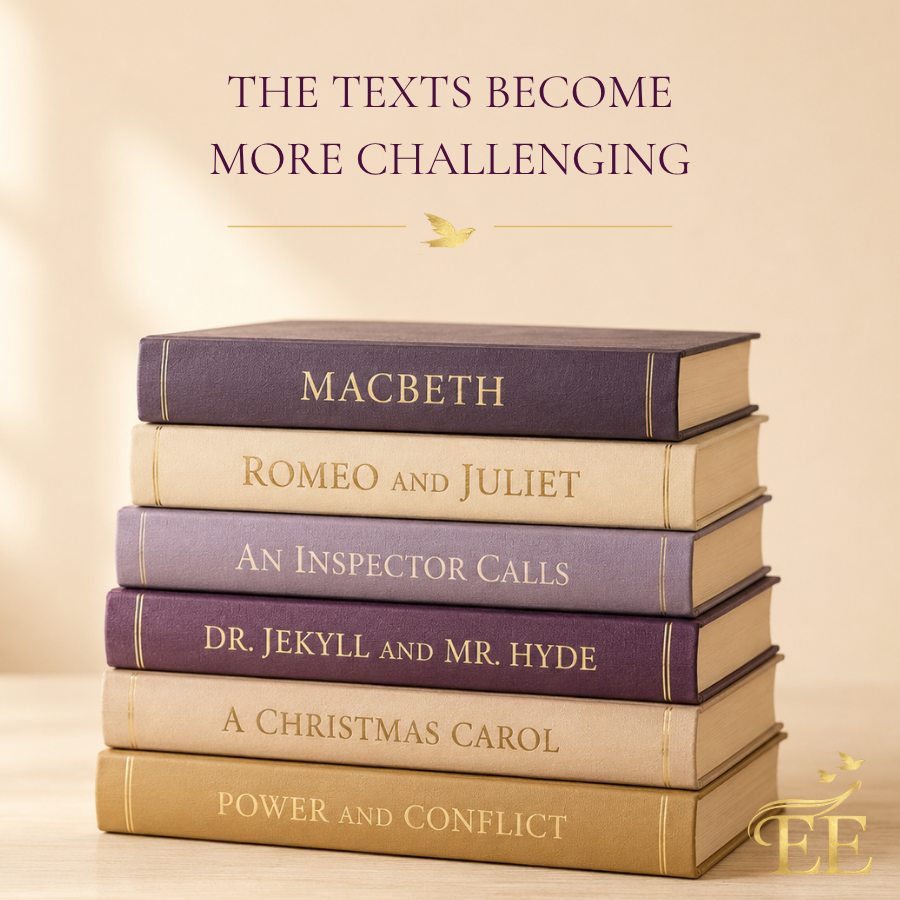
The texts become more challenging
GCSE English also introduces students to texts that are very different from the books they may have enjoyed when they were younger.
Many exam specifications include nineteenth-century literature, where students are faced with longer sentences, unfamiliar vocabulary and social contexts that can feel completely removed from modern life.
It’s hardly surprising that many students initially find these texts intimidating.
Knowing what to quote
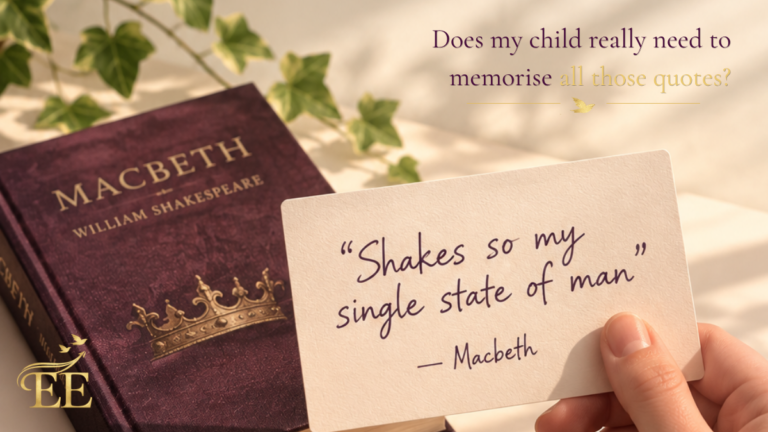
Another common difficulty is selecting evidence.
Students often understand a text reasonably well but have no idea which quotation to choose. Faced with several pages of writing, they wonder, “How do I know which words matter?”
Learning to identify the most significant quotations – and understanding why they are significant – is a skill in itself.
Getting ideas onto paper
Perhaps the greatest challenge of all is turning ideas into well-structured written responses.
Many students have perfectly good thoughts about a text but struggle to organise those ideas into answers that demonstrate their understanding clearly enough for the examiner.
Sometimes they spend so long wondering how to begin that valuable exam time disappears. By the end of the paper they’re rushing, leaving answers unfinished or failing to include everything they know.
Over the years, I’ve taught thousands of students, and one thing has become very clear: very few are genuinely “bad at English”. More often, they simply haven’t yet been shown how to approach it. Once that happens, confidence often grows remarkably quickly.
So, what can parents do?
Schools work incredibly hard to teach the knowledge and skills needed for GCSE English. However, if a student already feels overwhelmed, it’s easy for lessons to become a blur of terminology and techniques. Confidence can quickly disappear and students begin to think, “I’m just no good at English.”
Fortunately, there are lots of ways parents can help.
Encourage reading – but don’t make it feel like homework
Reading remains one of the best ways to improve English, but it doesn’t have to mean sitting quietly with a novel.
Reading together, listening to audiobooks or simply talking about a story can all make a real difference.
Ask simple questions such as:
- What’s happened so far?
- Which character do you like most?
- Why do you think they did that?
- What do you think might happen next?
These conversations develop exactly the kind of thinking that GCSE English requires.
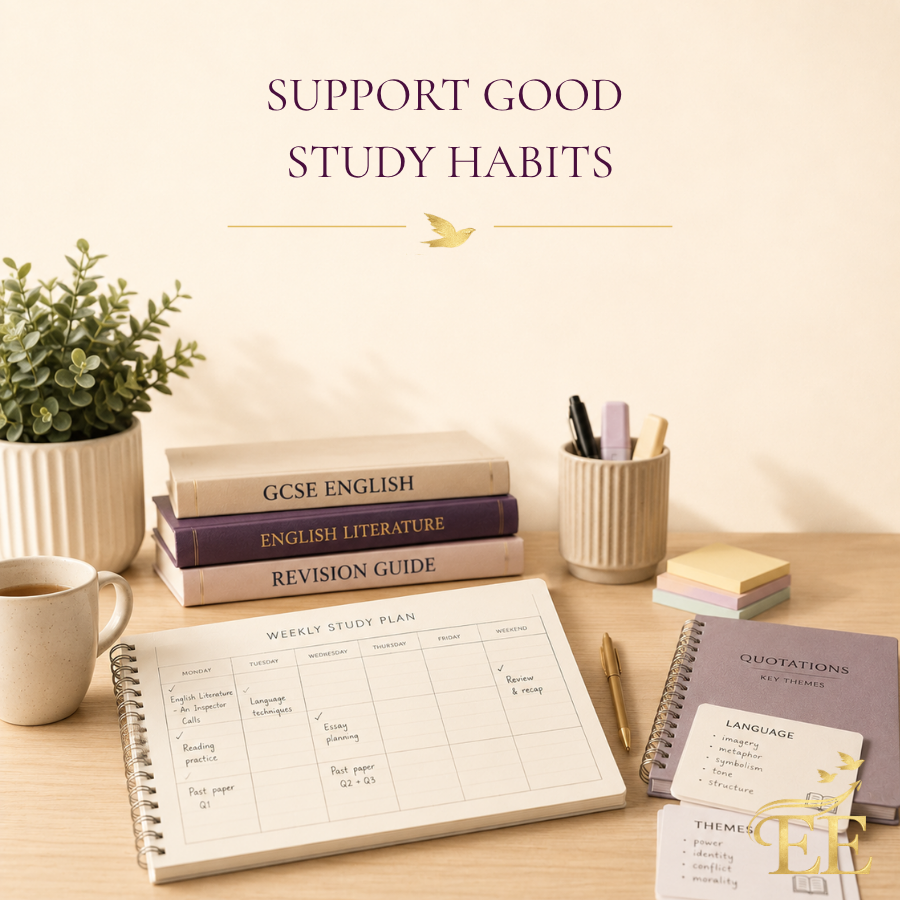
Support good study habits
A realistic revision timetable, regular practice and high-quality resources can all help students feel more in control.
Websites such as BBC Bitesize, Seneca and Quizlet provide excellent revision materials, particularly when used little and often rather than in last-minute cramming sessions.
Build confidence, not just knowledge
One of the biggest barriers to success is confidence.
When students believe they “can’t do English”, they often stop taking risks, stop sharing ideas and become convinced they’re destined to fail.
Rather than simply teaching students what to write about a particular text, I focus on teaching them how to think like a successful English student. Once they understand how writers create meaning, how to choose the best evidence and how to develop thoughtful analysis, those skills transfer across every text they study.
One of the greatest privileges of my job is seeing a student arrive saying, “I just don’t get English,” and leave a few weeks later saying, “Actually… my ideas are good. I know how to explain them now.”
Because that’s the truth about GCSE English.
For most students, success isn’t about being naturally gifted. It’s about developing the right skills, building confidence and learning to see texts in a different way.
And when that happens, English becomes far less daunting and, often, far more enjoyable.